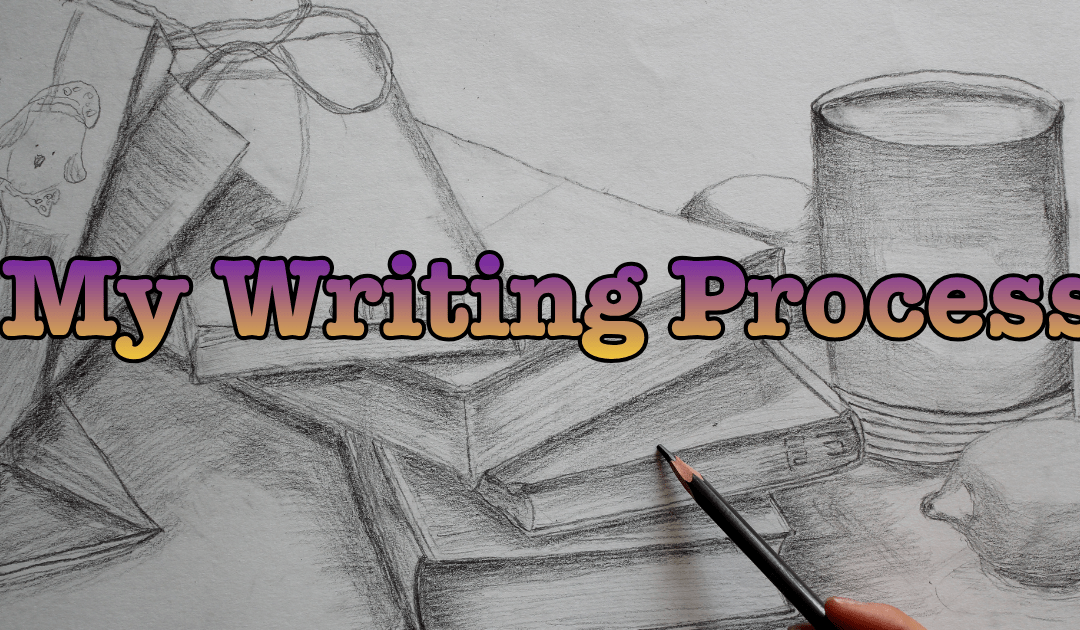
I have an art degree, so drawing metaphors work well for me. I also did A LOT of theater.
My first draft feels a lot like a gesture drawing.You can’t edit a blank page, and I want to get all the parts of the story down. They’re usually almost entirely dialog and simple blocking. I blame my theater background.
I’m a discovery writer (“pantser”), which means I don’t outline. “Plotting vs. Pantsing” is a common debate among authors despite the fact that any process that results in a novel you’re proud of is a valid process. I usually suggest that new authors try outlining first. I tried really hard to be an outliner, but then I’d get to the end of the story and my characters would refuse to do the thing. My drafting would screech to a halt and I’d have to stop and take a break and figure out my new ending. I took this as a sign that I was probably a discovery writer.
My novels are discovery written, and my favorite part of this is when my characters surprise me. Unfortunately, I still have the same problem with endings. This is okay; it’s common for pantsers to have a problem with endings. If you get to the end and are like, “Shit, I don’t know. Rocks fall, everyone dies?” you might be a pantser.
Getting to act three feels like this to me. 😉 In this metaphor, my characters are the horse.
So, whether I outline or not, I have to stop what I’m doing (SCREEEEEETCH) and take a break to figure out what’s going on. I usually create an outline of the end, which I don’t follow. No, really, that’s not what happens! But it unsticks me, so it does what it needed to do.
The next thing I do is read it on an e-reader like an actual book. I then reverse outline, with an Excel spreadsheet and color-coding and a bunch of Type A analytical non-pantsy-feeling stuff. I mean, I’m sort of that kind of girl and the discovery writing is probably more surprising.
Once I feel confident in the structure, it’s time to add in all the detail so it looks like a novel and not a stage play. I honestly tell myself “sight sound smell taste touch” in every scene and try to get most of those things into the draft.
The next thing I used was a PDF that I marked up on a Remarkable. This was a great experience. 10/10. I tried to read it like a reader and also marked my drafting tics with increasingly exasperated comments to myself. LOL!
After addressing all those changes, I got Microsoft Word to read the whole thing aloud to me. This is helpful for things like repeated words that your eyes slide right over in Scrivener and general awkward sentences.
My book is in beta reading right now. After that I’m going to be doing copy editing and proofreading.